Metal Gate Repair on the Walk Gate the Rules Actually Measure
On
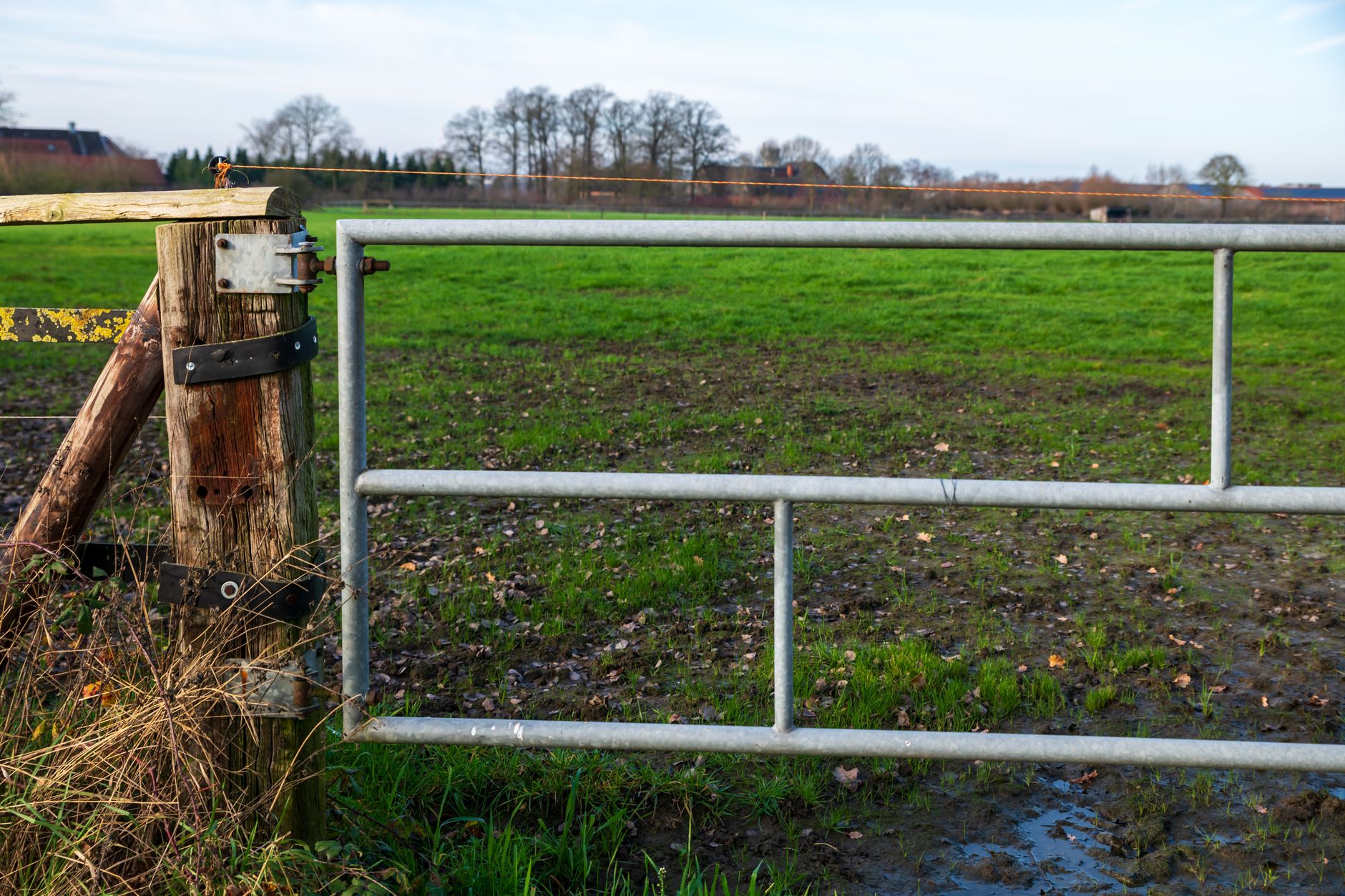
The gate that gets measured with a tape by somebody who does not live at the house is almost never the driveway gate. Driveway gates are judged by eye and by whether the operator still closes them. The small gate at the side, the one most owners describe as an afterthought, is the one that can be read against a list of figures, and either agrees with them or does not.
That happens because of what is usually behind the fence line. Once a property has a pool, a spa, or in many places simply a yard that a toddler can reach from a neighbour's side, the short gate stops being a convenience and becomes part of a barrier. Barriers are written down. They have heights, gaps, latch positions and swing directions, and those numbers do not move when a hinge wears.
The practical consequence is one most homeowners never hear until an inspection or an insurance renewal. A dropped hinge on a pedestrian gate is not only an annoyance that makes the latch need a lift. It changes a measured dimension, which means the gate has quietly stopped doing the one job somebody wrote rules about. The same half inch of wear on a sixteen foot driveway leaf is a nuisance. On a three foot barrier gate it can be the difference between a latch that engages on its own and one that does not.
The one gate on the property with numbers attached to it
Worth saying plainly: the figures below are the model code numbers that most jurisdictions start from, and the permit office for your own address is the authority. Local amendments exist, older installations are often grandfathered until something is replaced, and a pool enclosure on a property line can pick up a second set of rules from an HOA. The point of knowing the numbers is not to argue with an inspector. It is to understand which repairs are cheap and which ones quietly turn into a new leaf.
The five figures a barrier gate is read against
Latch height. The release for the latch is expected to sit high, commonly at least fifty four inches above the ground on the outside face, so that a small child cannot reach it. A latch mounted at a comfortable adult hand height passes nothing.
The gap under the leaf. Measured from the bottom of the gate to the surface below it, typically no more than two inches over a hard surface. This is the figure that moves most, because the ground moves and the hinge wears, and it is the one nobody re-measures.
Openings in the leaf. The usual test is a four inch sphere, and where the gate has horizontal members far enough apart to be climbed, the allowable vertical spacing tightens considerably, often to about one and three quarter inches. A decorative panel added later is the common way a compliant gate stops being one.
The shielded zone around the latch. Where the release is on the pool side of the gate, the rules add a protected area around it, roughly eighteen inches, with no openings bigger than half an inch, so that nobody can reach through the pickets and work the latch from outside.
Climbability of what is next to it. A gate can be perfect and the barrier still fail because an air conditioner condenser, a planter wall, a stack of pavers or a trellis sits beside it. The gate is only as tall as the thing a child can stand on.
Swing direction is settled before anything is cut
A barrier gate is normally required to swing away from the pool, which sounds like a detail and is actually the single decision that is hardest to reverse later.
Swing direction sets where the hinges go, which side the latch and its shroud sit on, where the closer body mounts, and which way the ground has to fall for the leaf to clear it. Reversing a hung gate means new hinge positions on the post, a new strike, a relocated closer, and usually fresh holes in a post that already has a set, which is how a post face ends up with no sound metal left to anchor into.
It also interacts with the approach. A gate that opens toward the person arriving forces a step backwards while they are carrying something, and that is the gate that gets shouldered rather than opened. If the required direction is also the awkward direction, the answer is a wider landing or a different gate position, not a quiet decision to hang it the convenient way.
Self closing and self latching are two separate tests
These get spoken about as one feature and they fail independently.
Self closing means the leaf returns to the frame from any open position with nobody helping it. The honest test is not from fully open, where momentum does the work, but from a few inches open, where there is almost none. That is the condition a child leaves behind, and a tired spring will carry a gate through ninety degrees of swing and then stall two inches short.
Self latching means the latch engages on its own once the gate arrives. A gate can close perfectly and rest against a strike it no longer reaches. The failure is almost always vertical: hinge wear has dropped the latch edge, so the bar lands under the keeper instead of in it.
The hardware choice matters more than the adjustment. A bare spring hinge accelerates the leaf into the strike, which is hard on the frame and tends to bounce the latch rather than seat it. A closer with a controlled final few degrees puts the gate against the strike at a speed the latch can actually catch, and it holds its tension far longer than a spring that somebody has backed off because the gate felt stiff.
What a repair is allowed to move
This is where most of the money is decided, and it is worth separating the three categories.
Hardware fixes, which are cheap: a new latch at the correct height, a slotted strike that can be re-registered with a screwdriver, a shroud over the reach zone, a bushing pressed into a worn hinge barrel, a new pin, a closer in place of a spring. None of these touches the leaf.
Leaf fixes, which are moderate: a bottom rail raised or a rising edge cut to restore a consistent gap, a solid plate added behind the latch area, additional vertical members welded in to close spacing that is too generous. These require the coating to be repaired properly afterwards, which on the Gulf Coast is not optional.
Rebuilds, which are the expensive outcome: a frame that has racked into a parallelogram, a hinge stile with no sound metal, or a post that has moved far enough that nothing bolted to it stays in position. A gate on a moving post cannot be fixed by adjusting the gate. Every adjustment made to a gate on a moving post is temporary by definition, and the sequence has to be post first.
Locks on a gate that has to work from both sides
A barrier gate is also the gate people leave through, and the two jobs pull in opposite directions.
Keeping children out argues for a high latch and a lock. Getting adults out in a hurry argues against anything on the inside that needs a key. The usual resolution is a latch released from the inside without a key and a keyed or coded function on the outside only, which is also how most exterior doors are set up.
Keypads earn their keep here because the walk gate is the way in when the driveway operator has no power, but they take a beating: hand height, outdoors, pressed hard by people who are not gentle. The ones that last have a stainless front, a weather shroud, and a mechanism that can be rebuilt rather than discarded whole. A keypad is also one more cavity that collects salt film, so it wants a dry film lubricant rather than a wet oil that holds dust against the contacts.
Matching the driveway gate without inheriting its hardware
The two gates should read as a set. That means a shared finish system, a shared picket profile, and a top rail that relates to the fence line the same way. It does not mean the same infill density, because spacing that looks balanced across a long leaf often looks crowded across a short one, and it certainly does not mean the same hardware.
Driveway gate hardware is specified for mass and span. Barrier gate hardware is specified for latching reliability, reach, and a closing function that has to work on the thousandth try. The parts are not interchangeable in either direction, and fitting whatever was already in the van is how a gate ends up decorative.
Why the numbers drift in Pearland
The figures are fixed. The ground is not. Properties across Pearland sit on high plasticity clay that swells through a wet spring and shrinks back through a dry August, and a gate post set in that soil tilts a little with the season. Add the humidity that keeps a hinge barrel damp from spring to autumn and a gap set carefully at two inches in February can read noticeably differently by the end of the summer, in either direction.
That is the argument for adjustable hinges and a slotted strike on this ground rather than welded hardware that can only be corrected with a grinder. It is also the argument for treating the measurements as a seasonal check instead of a one time inspection, because the day a barrier stops measuring correctly is not a day anything announces itself.
Ninety seconds with a tape
Three measurements and one test tell you nearly everything before anyone quotes.
Measure from the ground to the bottom of the closed leaf at both ends, because a gate out of level reads differently at the hinge and at the latch. Measure from the ground to the latch release on the outside face. Then lift the latch edge of the closed gate by hand and see how far it rises, which is the clearest single indicator of hinge wear.
The test: open the gate four or five inches, let go, and watch. It should come back and latch with no help at all. A gate that fails that from four inches while passing from wide open is telling you the closer is tired or the strike has drifted, and both of those are hardware, which means both are cheap, which means doing it now is the whole saving.